THE HR PULSE
Practical guidance from Delta Administrative Services with Gotcha Covered HR
Strong fourth-quarter performance is rarely created after the quarter begins. The weeks before Q4 are when leaders still have time to clarify priorities, prepare for benefits decisions, and close payroll or compliance gaps before year-end pressure builds.
This issue covers what to review now: changes to the 2026 Form W-2, the 2027 ACA affordability threshold, leadership readiness, and storm-season closure pay.
Q4 BEGINS OCTOBER 1
Most of what makes the fourth quarter go smoothly is decided before it starts.
HR Quick Wins Before Q4
Five practical actions your team can complete this week.
✓ Conduct one stay interview with a high-impact employee.
✓ Post the holiday closure calendar so employees can plan PTO requests.
✓ Name a backup for every payroll approval role before someone takes leave.
✓ Ask new or recently promoted managers what support they are missing.
✓ Update your storm communication contact list.

NATIONAL RECOGNITION
Delta Named to the 2026 Latino Leaders Index 500
Delta Administrative Services has been recognized in the 2026 Latino Leaders Index 500, Powered by BMO, the annual ranking of the largest Latino-owned businesses in the United States by revenue.
Teresa Lawrence, Owner and CEO, and David Lawrence, President, represented Delta at the celebration in New York City alongside Latino business leaders from across the country.
This recognition reflects the employees, clients, and partners who have helped build Delta. Thank you for being part of our story.
Learn more about Delta Administrative Services ›
Payroll and Year-End Readiness
Year-end payroll preparation is easier when the review starts before the fourth quarter is underway.

Start by confirming
✓ Employee names, addresses, and Social Security information
✓ Taxable fringe benefits
✓ Benefit deductions and employer contributions
✓ Employee classifications
✓ Year-to-date wage and tax totals
✓ Payroll account access and direct-deposit change procedures
What Changed on the 2026 Form W-2
The 2026 Form W-2 includes changes associated with Public Law 119-21. They apply to forms furnished to employees in early 2027, which makes the fourth quarter a practical time to confirm that payroll systems and data are configured correctly.
Three new Box 12 codes may apply:
TA — employer contributions to a Trump account
TP — total cash tips reported to the employer
TT — total qualified overtime compensation
Box 14 has also been split. Box 14a carries information previously reported in Box 14. Box 14b reports up to two Treasury Tipped Occupation Codes when cash tips are reported using Box 12 code TP, and code 000 must be included if any reported tips came from a nonqualifying occupation.
For employers with tipped employees, the practical work starts now: confirming occupation codes, verifying that overtime is tracked in a way that separates qualified amounts, and checking that your payroll system supports the new layout.
For clients of Delta Administrative Services with Gotcha Covered HR, our payroll team is already configuring for these changes. If you have tipped employees, let’s confirm occupation codes together before year-end. Payroll & tax administration ›
Benefits Planning Starts Before Open Enrollment
For many organizations, open enrollment is the single most important employee communication period of the year. Early preparation gives employers time to evaluate plan performance, review costs, confirm eligibility, and build a clear communication strategy.
10.22%
The ACA employer-coverage affordability percentage will be 10.22% for plan years beginning in 2027, up from 9.96% for 2026. Applicable large employers should model employee contributions under the relevant affordability safe harbor rather than simply carrying forward the current contribution amount.
Source: IRS Rev. Proc. 2026-26 — Internal Revenue Bulletin 2026-31
Consider these questions:
• Are employees using and understanding their current benefits?
• Are eligibility and dependent records accurate?
• Have contribution strategies been reviewed against the 2027 threshold?
• Do managers know where to direct employee questions?
Clear benefits communication helps employees make informed decisions and understand the full value of their compensation. Explore employee benefits solutions ›
FEATURED INSIGHT
AI Readiness Is a Leadership Challenge
AI adoption is usually treated as a technology decision. In practice, it is a leadership one.
Most implementations stall for reasons that have nothing to do with the platform. Employees are not sure which tasks they are permitted to use AI for. Managers are not sure how to answer when someone asks. No one has decided which workflows should actually change, so the tool gets layered on top of existing processes instead of replacing any of them.
Newly promoted leaders face a parallel problem. Their responsibilities expand faster than their support does, and they are often the same people being asked to lead the technology change.
Gotcha Covered HR’s Leadership & AI Readiness Training Program addresses both needs. Led by Barry Vose, SHRM-SCP, Senior Leadership Consultant, the program combines two complementary paths.
Promotion Readiness & Transition
• Readiness conversations before someone enters a new role
• Level-specific leadership development
• 30-60-90-day transition plans
• Support guides for managers and sponsors
AI Readiness & Technology Adoption
• Foundational AI concepts and responsible-use guardrails
• Organizational readiness assessment
• Workflow evaluation before platform selection
• A structured implementation roadmap

“For years, I’ve stressed to clients the need to prepare managers for their own growth within the organization. These programs give leaders a structured way to put that preparation into practice.”
Patricia Pannell, J.D.
President and CEO, Gotcha Covered HR Powered by Delta

Explore the Leadership & AI Readiness Training Program ›
Questions about which program fits your organization? Contact Barry Vose at barry@gotchacoveredhr.com.
If You Close, Who Gets Paid?
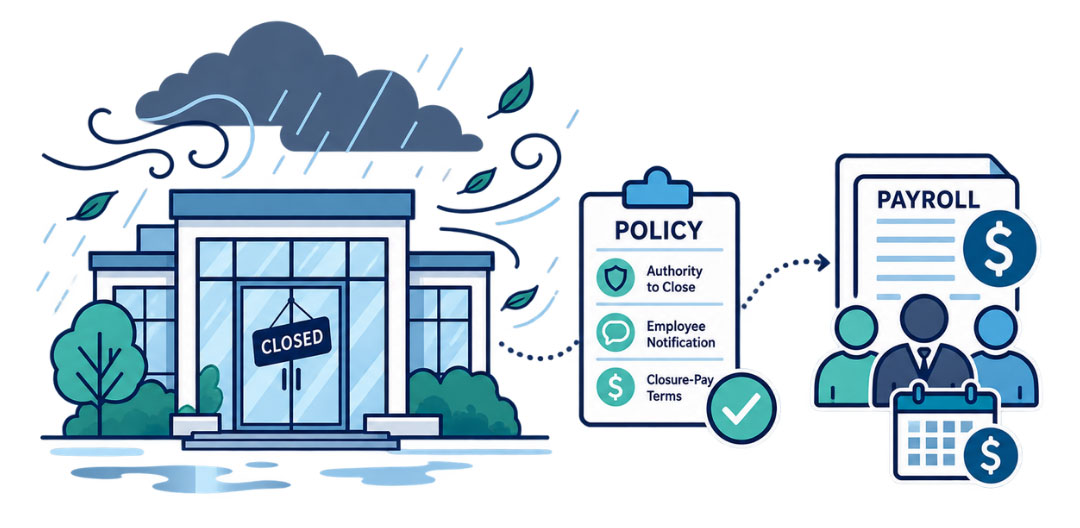
Peak hurricane season runs through the fall, yet many organizations do not confirm their closure-pay approach until a storm is already underway.
As a general federal rule, non-exempt employees must be paid for hours worked. Exempt employees generally must receive their full salary for any workweek in which they perform work, subject to limited exceptions. PTO treatment and additional closure-pay requirements may vary by policy and state or local law.
Confirm three things now: who has authority to declare a closure, how employees will be notified, and what your policy actually says about pay during one.
If you are not certain how your policy reads, our team can review it with you. Get HR policy and compliance support ›
This overview is general information, not legal advice. Consult your HR or legal advisor about your organization’s circumstances.
Is Your Organization Ready for Q4?
Delta Administrative Services with Gotcha Covered HR can help you prepare your workforce, benefits strategy, payroll processes, and leadership team for a stronger year-end.